


 News
NewsStudents from the School of Internet of Things Engineering won the bronze medal at the 2025 RoboCup Robotics World Cup.
Recently, the 2025 RoboCup Robot World Cup was successfully held in Brazil. The Dionysus team from the School of Internet of Things Engineering secured third place in the 3D Soccer Simulation category, matching the best result achieved by a Chinese university team in this division over the past decade.
Founded in 1996, RoboCup (Robot World Cup Initiative) aims to advance artificial intelligence and robotics through robotic soccer competitions. Its grand vision is to assemble a fully autonomous robotic team capable of defeating the human soccer world champions by 2050. The Simulation League, one of RoboCup's core sub-projects, challenges teams worldwide to develop autonomous software agents that manipulate simulated robots in a 3D environment for competitive soccer matches. This format emphasizes control systems, team coordination, and real-time decision-making strategies.
Held in Salvador, Brazil, from July 15–21, 2025, the competition drew teams from numerous prestigious universities worldwide. At this RoboCup Simulation 3D World Championship, the Dionysus team faced formidable opponents from multiple countries and regions across group stages, knockout rounds, and placement matches. Facing university teams from robotics powerhouses like Germany, Portugal, and Brazil, the Dionysus team remained composed and methodical. Through meticulous tactical planning and exceptional execution, they defeated formidable opponents to ultimately secure a spot among the world's top three teams, matching the best result achieved by a Chinese university in this event over the past decade.
This year's team participated remotely, placing heightened demands on organizational coordination and adaptability. The entire Dionysus team collaborated seamlessly, maintaining clear remote divisions of labor and a tightly paced workflow. Throughout the week-long competition, members worked day and night, continuously iterating strategies and optimizing the system. They meticulously analyzed match logs and recordings to promptly identify and fix system vulnerabilities, while also adjusting offensive and defensive tactics in real-time based on opponents' behavioral patterns. This ensured the robot maintained high efficiency and agile responsiveness throughout the competition.
During the group stage, Dionysus opened with a 2-1 victory over Brazil's BahiaRT, followed by a 1-0 win against another Brazilian powerhouse, Pequi. Despite a narrow 1-2 loss to Germany's traditional powerhouse magmaOffenburg, two wins secured their advancement to the second stage. Advancing to the second group stage, Dionysus fell to multiple-time world champions FCP but secured a crucial 2-1 victory over BahiaRT, successfully advancing to the overall round-robin stage. During the round-robin stage, Dionysus faced elite teams from around the world. After multiple intense rounds, they demonstrated stable team coordination and technical execution, ultimately advancing to the semifinals as the third-place finisher in their group. In the semifinals, they once again faced magmaOffenburg. Against this technically versatile and well-coordinated opponent, Dionysus gave their all but ultimately fell 0-2, missing the finals.
In the third-place match, Dionysus adjusted their tactics and quickly regained momentum, defeating the multiple-time Chinese champion team Apollo3D from Nanjing University of Posts and Telecommunications with a score of 4:1 to claim the bronze medal. Notably, Dionysus and Apollo3D share a deep connection, having maintained long-term technical exchanges and collaboration since 2023—a relationship of mutual mentorship and support. Throughout critical phases like tactical design and reinforcement learning training, Apollo3D consistently provided selfless assistance. This invaluable support enabled Dionysus to overcome technical bottlenecks and steadily enhance its overall capabilities. Their clash on the global stage further highlights the thriving ecosystem of research-driven competition and collaborative development among Chinese universities.
From the initial preparation and submission of qualification materials, to the deployment of simulation environments, strategy framework design, model training and testing, through to real-time scheduling during the competition and post-event debriefing, every step embodies the dedication and ingenuity of the team members. The entire competition not only tested the Dionysus team's comprehensive technical capabilities in robot autonomous control, collaborative decision-making, and system robustness, but also demonstrated their formidable remote collaboration skills and professional competition expertise. This was a dual contest of technology and perseverance, and a profound test of team cohesion and execution.
While achieving a historic breakthrough in this competition, the Dionysus team remains acutely aware of the gap that still exists between them and the world's top performers. Particular areas requiring urgent improvement include motion control and athletic skill training. Moving forward, the team plans to further enhance the robot's stability during field navigation, increase the accuracy of goal-kicking, and improve collaborative efficiency during passing sequences. Simultaneously, the team will actively integrate next-generation reinforcement learning algorithms to optimize the synchronization between decision-making capabilities and motion control. More detailed and diversified simulation training tailored to various match scenarios will be conducted to comprehensively elevate the team's overall strength and strive for new breakthroughs.
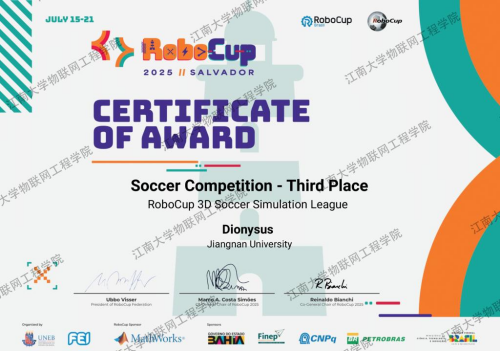
Award Certificate
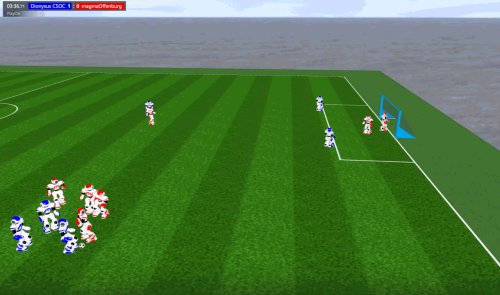
Competition Scene (I)
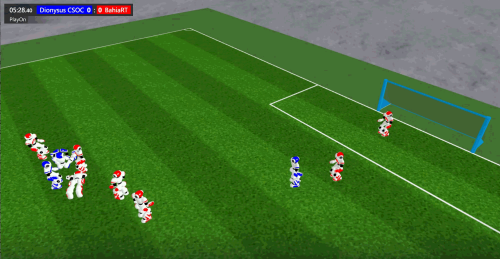
Competition Scene (II)
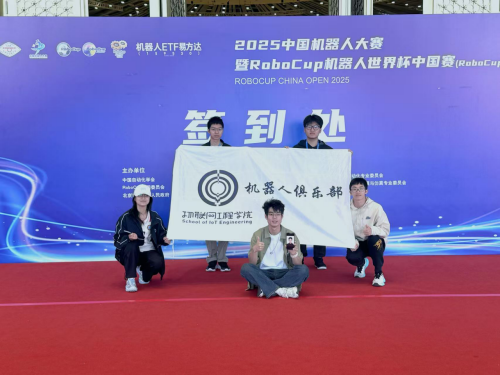
Team Photo (During China Competition)
Host education technical department of jiangnan university. Address: no.1800, lihu avenue, wuxi, jiangsu, 214122
Technical support: information construction and management center. All copyright © jiangnan university